
Video Production
What Affects Video Production Cost? A Practical Buyer’s Guide
Compare video production quotes by scope: crew, travel, locations, creative complexity, editing and deliverables, with two real-world budget examples.
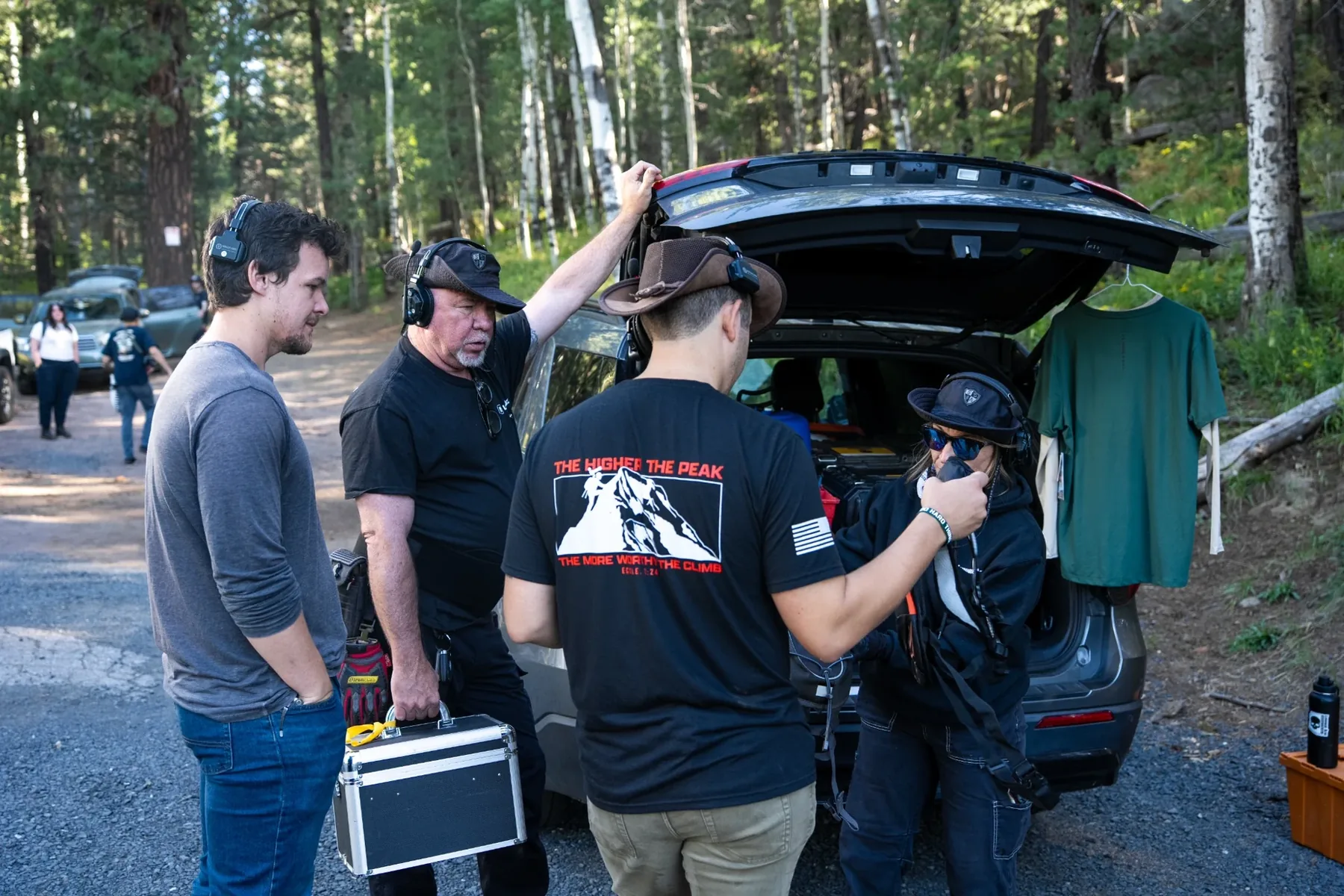
Two proposals can both say “corporate video” and describe very different jobs. One might cover a local interview and a footage handoff. Another might include travel, several locations, photography and a full set of edited campaign assets.
Video production cost depends on what it takes to capture the story and deliver something your team can actually use. Runtime alone tells you very little. A tightly scripted 30-second ad can require more planning and production than a longer interview video.
At Occulus Films, we start with the business purpose, the creative approach and the deliverables. Those choices give a budget meaning. Here is how to compare them before you commit.
How much does video production cost?
There is no single price that usefully covers every business video. To make the differences concrete, here are two examples from our production experience. One was under $5,000; the other was around $25,000–$40,000. These are scope examples, not standard packages, starting prices or quotes for your project. Exact costs will depend greatly on the specific scope of work.
A focused local shoot: under $5,000
- A local half-day shoot with two crew members.
- Two short interviews, approximately 15 minutes each.
- Basic lighting and a single-camera setup.
- About 15 minutes available for limited B-roll.
- Footage handed off to the client for post-production.
This was a narrow assignment suited to a specific use, in this case, a video to be played live at a company event for a charitable giving segment. The client was taking responsibility for the edit. A limited scope and an available half-day arrangement made this approach possible.
A broader content production: $25,000–$40,000
- A two-day, out-of-town shoot.
- Two traveling crew members and three additional crew members hired for the production, including a photographer.
- A full day of testimonial interviews.
- A full day of B-roll across two to four locations, including office activity, software use and technicians at work in the field.
- Post-production for three edited videos and a package of 50–100 edited photographs.
This scope supported broader branding, promotion and paid advertising. It included more capture, a more involved production approach and substantially more finished material.
Comparing only the totals misses the point. The first buyer needed a tightly defined capture session. The second needed a body of content and the work to finish it.
1. Creative complexity changes the work behind the camera
A simple interview and a highly polished corporate interview may look similar on a shot list. Achieving a different level of lighting, camera coverage and on-set attention can require more equipment and a larger crew.
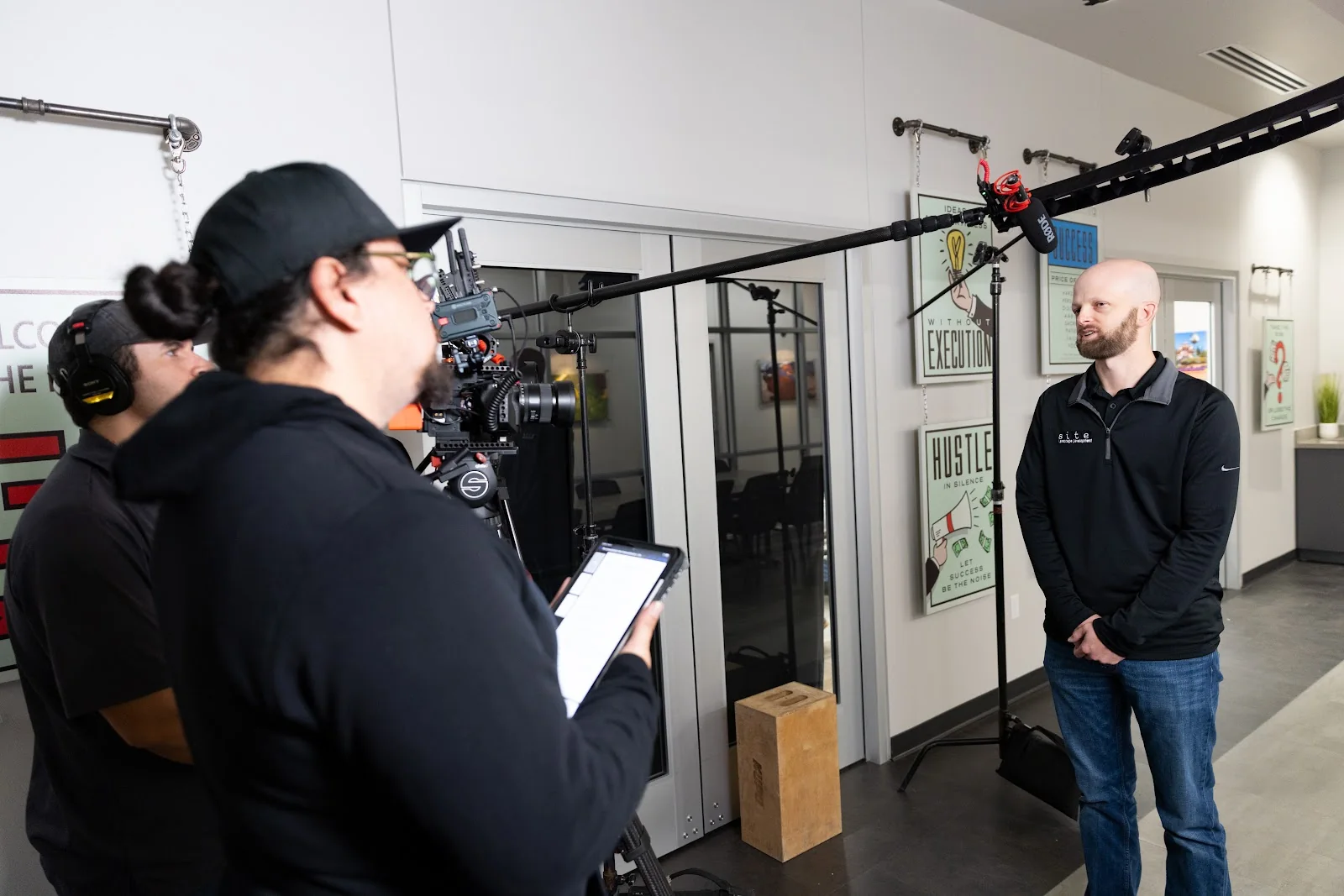
There is another significant jump between documentary-style capture and a scripted production. With a documentary approach, we can work with real people and activity, respond to what happens and build the story from that material. A leaner crew and available light may suit the job.
A heavily scripted concept asks us to control much more of what the audience sees and hears. Casting, wardrobe, locations, lighting and individual actions all need decisions. That adds pre-production time and may add specialized crew or equipment.
If you need a specific moment to unfold exactly as written, budget for the work required to create it. If your goal can be served by documenting real people doing real work, discuss that approach before committing to a scripted concept.
2. A short shoot can still require a full crew day
“We only need one quick video” does not necessarily mean a crew can be booked for an hour or two. Many freelance crew members need to reserve a full day because accepting your shoot prevents them from taking another job that day. Important to note, many production companies rely on freelance contractors / crew to provide key services. While in-house teams exist, they are usually smaller and still need to hire supplemental help.
There is also work around the time on location: preparing and checking equipment, packing it, traveling, unloading, resetting equipment afterward and dealing with maintenance. Two half-day client shoots rarely fit together as neatly as two blocks on a calendar.
Half-day arrangements are sometimes possible. An in-house team or an established relationship with freelance crew can provide flexibility. They should be discussed rather than assumed.
When you are booking a day, plan to get useful value from it. Could the same setup support another customer interview, leadership message or a few short answers for your sales team? Agree on priorities in advance so additional capture does not undermine the main assignment.
3. Travel and location moves take production time
Travel costs can extend beyond flights, hotels and a rental car. If crew members need to fly in, their travel days also need to be considered. Ask a production company what travel time and expenses its proposal includes.
Even within one city, every location change has a cost in time. The crew needs to pack, move, unload and set up again. A new space may require relighting or changes to the set.
A three-location ad can therefore be more expensive than a one-location ad, even when the planned shoot window is similar. Each move leaves less time for filming and may change the resources needed to finish the shot list.
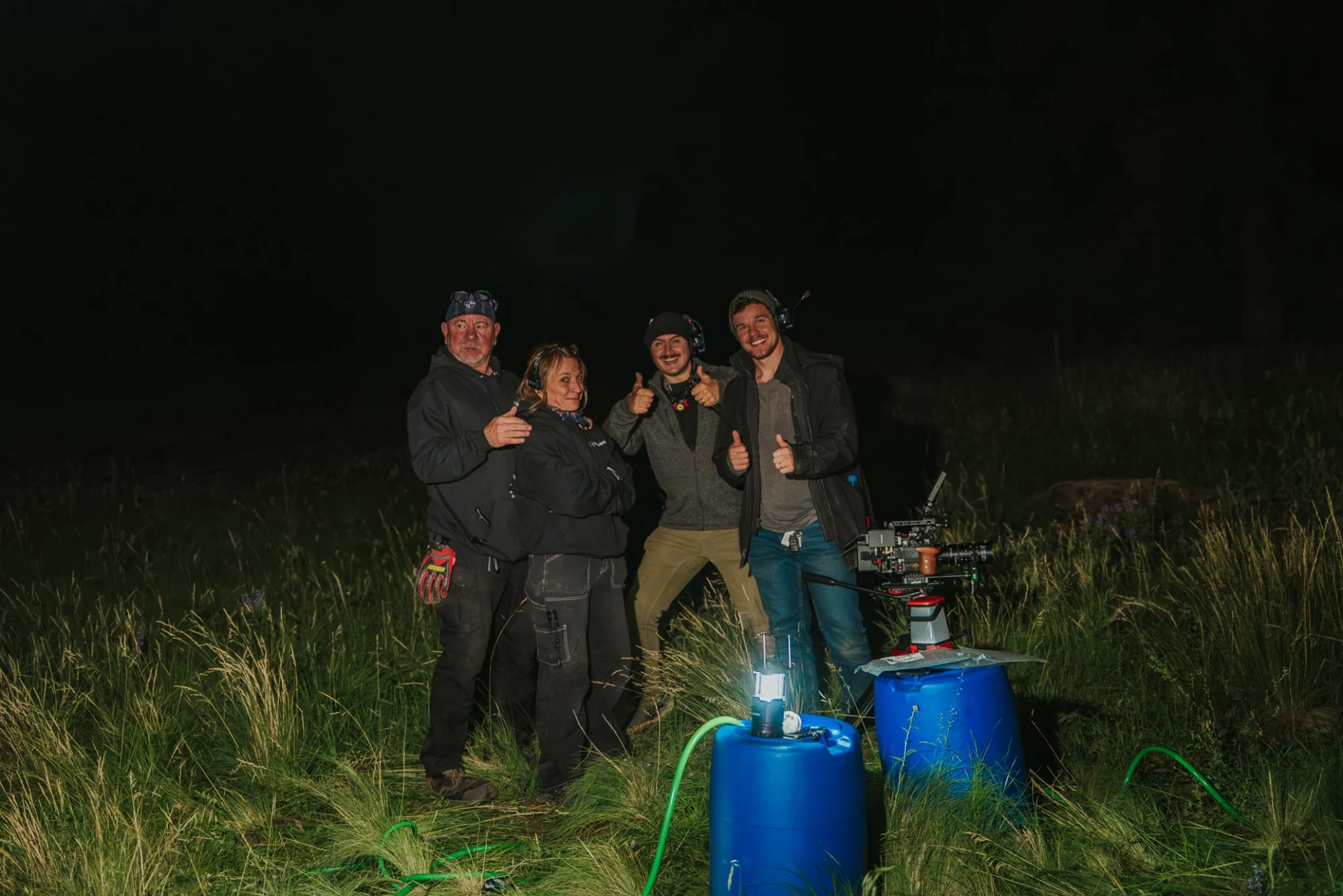
Start by asking which locations genuinely help tell the story. Sometimes one well-chosen location can support several useful looks. Sometimes showing the real field environment is essential. Make that decision deliberately.
4. Post-production depends on what needs to be delivered
A production-only quote and a finished-video quote are not interchangeable. A footage handoff leaves editing with your team. A finished deliverable may need an editor, review time, color work, sound finishing and multiple versions.
The level of finishing matters, too. A straightforward interview edit may be handled by one editor. A more elaborate scripted production may involve the director working with the editor, a colorist and a sound engineer.
Define the output before comparing quotes: how many videos, what lengths, which orientations and where each will be used. Include any photography, thumbnails, captions or alternate versions your team actually needs, and ask what is included.
Plan the versions you intend to use
Our Lifetime Home Remodeling testimonial project included a 60-second commercial, 30- and 15-second cutdowns, and variations for six TV channels. That is an example of planning deliverables around their placements, not a price comparison with the anonymous examples above.
Watch the Lifetime Home Remodeling testimonial commercial.
5. Rush schedules leave less room to resolve unknowns
A last-minute production may involve rush charges. It also leaves less time to investigate details that can affect the budget. A complicated shoot with very little preparation time deserves a realistic contingency.
As planning examples, we may discuss a contingency of roughly 5–10%, depending on complexity. For a complex, last-minute production, that discussion might move toward 15–20%. These are not automatic fees or universal requirements. The appropriate allowance depends on the risks in the actual project.
Clarify what a contingency covers, how additional spending would be approved and how any unused allowance is treated in your agreement. The purpose is to plan for reasonable unknowns instead of surprising everyone later.
Where cutting the budget can create more work later
Small production savings can leave your team with a larger implementation problem. Before removing something, ask who will do that work instead and whether they have the time and tools.
- Thumbnails and platform-ready versions. Removing these can leave your team with extra work before posting. A long horizontal video may not suit the short vertical placement you intended. Plan assets for their actual use.
- Editing. A raw-footage handoff can work well when you have an experienced editor ready to take over. It is riskier when an already-busy social media manager is expected to learn unfamiliar footage and finish the project alongside other duties.
- Pre-production. Cutting planning can create confusion on the shoot and leave important material uncaptured. Protect the decisions that make the day useful: story, interview subjects, locations, shot priorities and deliverables.
A better way to reduce cost is to simplify the scope. Prioritize the most important audience and use, consolidate locations where practical, choose a creative approach that fits the budget and capture related content during a well-planned production day.
What to ask before comparing video production quotes
Give each production company the same brief, then check these details:
- What business job should the content do, and who needs to see it?
- Is the approach interview-led, documentary-style or scripted?
- How many shoot days, locations and on-camera participants are included?
- Who is responsible for casting, location arrangements and preparation?
- Are crew travel days and travel expenses included?
- Is the price for capture only or finished work?
- How many edited videos, cutdowns, formats and photos will be delivered?
- What editing, review rounds and finishing are included?
- What assumptions, exclusions and contingency arrangements could change the total?
- Who will prepare and upload the content once it is delivered?
Video production cost: common questions
Can I estimate a video budget by its finished length?
Length is one part of the scope, but it is a poor shortcut on its own. A short scripted ad may require casting, multiple setups and detailed finishing. A longer interview may be more straightforward to capture and edit. Describe the approach and deliverables alongside the runtime.
Will booking a half-day cut the price in half?
Not necessarily. Equipment preparation, travel and the crew's availability still matter. Ask whether a half-day arrangement is available and what can realistically be achieved within it.
Is it cheaper to have our team edit the footage?
It can reduce the production company's scope, but your team still takes on the work. Confirm that someone has the skills, tools and available time to handle the footage and deliver the required versions. Compare the complete plan, including internal work, rather than only the supplier's invoice.
Build a budget around the content you will use
The most useful first step is a clear brief: your audience, the business purpose, the type of story, the locations, the deadline and the finished assets you need.
If you are planning interviews, our guide to video testimonial questions can help you prepare. For a wider view of the process, read the stages of video production.
Talk with Occulus Films about your project. We can discuss the scope and the tradeoffs that will help you make useful work within your budget.