
Video Production
12 Video Testimonial Questions + Tips to Uncover a Powerful Customer Story
A practical interview guide for uncovering the challenge, decision and outcome behind a customer's experience.
What makes for a great video testimonial, anyway?
A useful customer testimonial - a really good one - should be more than a set of facts about the service you provided, or the customer stating how they enjoyed working with you. That's nice, and certainly better than nothing, but it does not tell the story a prospective customer needs to hear.
What they need to hear is a STORY about CHANGE, about TRANSFORMATION.
It all comes down to storytelling. Most of the greatest stories of all time are about a transformation.
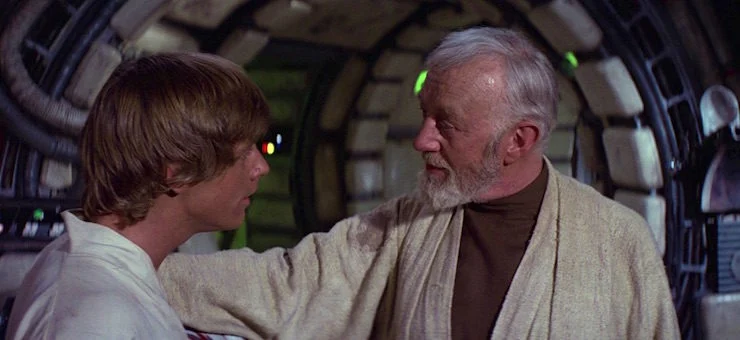
There are so many examples, but we all know the one about Luke Skywalker. A somewhat whiny, nobody moisture farmer on a backwater planet has a great teacher - a helper - and overcomes challenges, including self-limitations, to become a Jedi knight, redeems his father, and defeats the evil emperor. But the transformation is what we really connect to.
A great testimonial makes your prospect see a potential future where they are the one in the shoes of your interviewee. Where they see themselves after that transformation.
The nitty gritty of that: the testimonial, or what we also call an impact story, helps a prospect understand what the interviewee was struggling with (their pain), what triggered them to start looking for help, what challenge they overcome, and where they are now. And the great part is you are a supporting character in this story. YOU are the helper, the guide. You're Obi-Wan.
A general approach / rule of thumb
First, it's important when possible to avoid the use of notes, and to spend a few minutes with your interviewee to make them nice and comfortable, especially if they aren't accustomed to being on camera. Reassure them. Make them feel good! Make them forget about the cameras, if you can. I know - easier said than done.
Then, in an ideal world, you will use questions and conversation to guide them through their story. Get them to repeat the question in the answer, or provide context. Sometimes, getting a great answer requires you ask the same question a few different ways to dig deeper, or to ask them "why" questions to unearth the deeper reason behind something. For example, if you ask, "why did you choose to try our product out in the first place?" and your customer answers, "well, why tried the product because we just felt we needed a change from what we have now. We were just not as efficient as we wanted to be."
Okay, well that is a good start - but if you're following me, there's something deeper here. If you keep probing, your customer can reveal the true reasons they felt a strong enough desire for change to switch to you. For example, "we are pulling our hair out wasting so much time doing repetitive work when our tech's need management support in the field", or any number of reasons that will vary based on your industry. There is a pain, a deeper motivation, always.
A great trick you can steal from us is to ask "why" followup questions. "Why did you feel you needed a change? Why was it important to you to get more efficient from how things were?"
Just remember, you are guiding your customer through a story arc.
Start with the buyer's unanswered question
Another aspect to consider in addition to telling a customer's transformation story is addressing your audience's potential sales objections.
Before you book an interview, decide who will watch the finished video and where they will encounter it. A prospect comparing contractors may need reassurance about communication and follow-through. A team considering new software may need to understand implementation and everyday use.
Write down the concern the story needs to address. That gives the interviewer a purpose and helps the editor recognize which answers matter--so the end-result is focused in on the sales results you need.
The below video testimonial questions are a starting point for a conversation. Pick the ones that fit the customer and the decision your next buyer is trying to make.
12 questions for a customer testimonial video
- What was happening in your business before you started looking for help? Establish the situation in language another customer would recognize.
- What was the hardest part of that situation? Move beyond a broad problem to its practical consequences.
- Can you describe a specific moment when you realized something needed to change? Look for a scene or example rather than a slogan.
- What had you already tried? Understand the alternatives without steering the customer into criticizing someone else.
- What were you concerned about before moving forward? Make room for the hesitation a future customer might share.
- What made you decide this was the right fit? Explore the actual decision rather than asking for praise.
- What happened when the work began? Ask about the experience, communication and expectations.
- Was there a moment that changed your confidence in the decision? Find a concrete example of trust being earned.
- What is different now? Establish a comparison the customer can explain and support.
- Do you have a result or example that illustrates that difference? If there are numbers, clarify what they measure and over what period.
- Who do you think would benefit most from this? Let the customer describe fit in their own terms.
- What would you tell someone facing the same decision? End with useful advice rather than a scripted endorsement.
The follow-up is often more valuable than the next question
If someone says the process was easy, ask, “What made it easy?” If they say the team went above and beyond, ask them to walk you through what happened. Useful follow-ups include “What happened next?”, “What did that mean for your team?” and “Can you give me an example?”
Leave room for an answer to develop. The goal is to understand the experience well enough to tell it accurately. If an answer needs context, ask the person to explain it again in a complete thought.
Help people prepare without giving them a performance to memorize
Share the purpose of the interview and the topics (very broad strokes is fine) in advance. Generally, don't give out questions before the interview. Some people try to prepare by memorizing canned answers, which rarely works out. It's harder to be spontaneous, but that is how you draw out the real story.
Invite the customer to think of examples of the impact on them and gather any results they want to discuss. Keep the conversation comfortable, allow time to settle in, and make it clear that an imperfect answer is fine. Everything can be edited.
At Occulus, on-camera coaching is part of how we help people feel comfortable sharing their experience. We can guide the conversation and handle production details so the person on camera can focus on what they have to say.
Plan the pictures that support the story
An interview should not have to carry every detail alone. People experience the story through visuals as well. Capture the people, environment, product or work being discussed. As in filmmaking, try to "show, not tell" alone. Plan those images around the actual story: a team using the software, a finished space, or the work that goes into serving a customer.
If photography is part of the assignment, give it its own priorities and time. Consider whether the finished assets from video or photo need horizontal and vertical framing, captions, or space for graphics.
Decide how the testimonial will be used
Choose the first destination for the film: a service page, sales follow-up, event screen or paid campaign. Then scope any additional versions around those uses. Agree on approvals and distribution before production, and keep the customer's meaning intact in the edit.
You can explore our VoiceOps testimonial work or our Lifetime Home Remodeling project for examples from the portfolio.
Tell us about the customer story you want to capture. We can help with planning, the interview, filming, photography and post-production, or the specific production support your team needs.